
 Takeaways
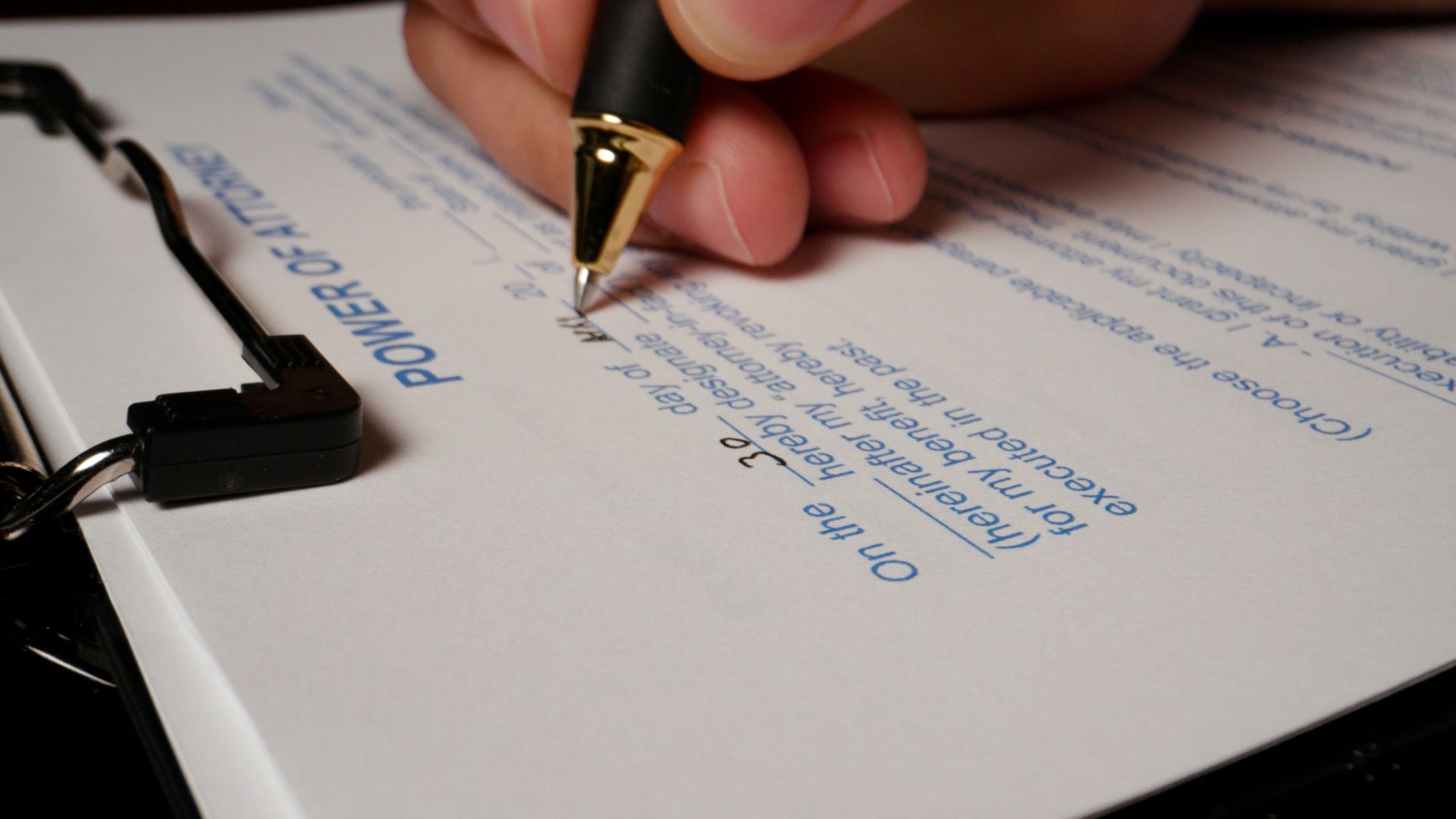 Takeaways
- A durable power of attorney is a legal document that allows a trusted individual to make financial or health care decisions on your behalf even if you become unable to handle your own affairs.
- This document provides long-term safeguards, ensuring your affairs are managed without court intervention.
Though you are likely in good health now and can handle your own financial transactions and health care decisions, there is always a chance you could lose that ability. It could happen suddenly, as with a car accident, or gradually, as with dementia. Planning for the possibility of incapacity is an important part of estate planning.
In creating an estate plan, your attorney will ask you to nominate people you trust to make financial and health care decisions on your behalf if you ever become unable to do so. Your completed estate planning packet will likely include two different documents addressing these decisions: one document will be for legal and financial matters and the other for medical treatment decisions. These documents are both power of attorney documents.
A power of attorney (POA) is a legal document that allows an individual (known as the principal) to give another person (their agent or attorney-in-fact) the authority to act on their behalf. Though many people are familiar with the general concept of POAs, not everyone understands the different types of powers of attorney and how they work, especially with regard to durable powers of attorney.
What Is a Durable Power of Attorney?
A durable power of attorney (DPOA) is a POA that remains valid even if the principal becomes incapacitated (unable to make or communicate decisions for themselves). The word “durable” refers to its endurance through someone’s loss of capacity. Without this durability, the authority your agent has would end if you became unable to make your own decisions.
Durable POAs are commonly used in estate planning, health care planning, and financial management. They give family members and trusted individuals the legal authority to step in when needed without having to go through lengthy court proceedings. Because the agent may have broad powers, choosing the right person is crucial. Abuse of POA authority does happen, so it’s best to select someone trustworthy and, if possible, have checks and balances in place.
When creating an estate plan, some people will choose different trusted individuals for their durable general (financial and legal) POA and their durable health care (medical) POA. Making this distinction can help spread the responsibilities among different trusted people. This strategy also considers that some agents would be better at handling financial decisions and others better with medical decisions.
Power of Attorney vs. Durable Power of Attorney
The key difference between a power of attorney and a durable power of attorney is whether the authority survives the principal’s incapacity.
Power of Attorney
If a POA doesn’t explicitly state that it is durable, then in most states it is assumed to be nondurable by default. A nondurable POA is typically used for specific, limited transactions. For example, if someone is traveling abroad, they might grant a POA to a trusted person to sign real estate paperwork while they are away. Once the task is complete, or if the principal becomes incapacitated, the document is no longer valid.
Durable Power of Attorney
A durable POA is longer lasting and usually broader in scope. It remains valid even if the principal experiences a serious injury or illness or cognitive decline. Executing a DPOA can prove particularly important in situations involving aging, chronic illness, or unexpected medical events.
In short, POAs are temporary tools for convenience and durable POAs are safeguards for long-term planning.
Common Uses for Durable Powers of Attorney
A durable POA can cover a wide range of decisions, depending on how it is written. Some common uses include:
- Decisions regarding financial affairs. Paying bills, managing investments, handling tax returns, and maintaining bank accounts.
- Real estate transactions. Selling, buying, or managing property if the principal cannot handle the paperwork.
- Health care decisions. When paired with a health care power of attorney, often a standalone document, the agent may make medical decisions if the principal is incapacitated.
- Legal matters. Signing contracts or managing lawsuits on behalf of the principal.
Things Many People May Not Know About Durable Powers of Attorney
Despite their importance, durable POAs are often misunderstood. Here are some good things to know about them:
- They can be as specific as you want. A durable POA doesn’t have to grant blanket authority. The role can be tailored to cover only certain actions, such as managing a single bank account or selling one piece of property.
- They can become effective immediately or upon one’s incapacity. Some DPOAs are effective as soon as they’re signed. These are sometimes referred to as standing DPOAs. Others, known as springing durable POAs, only become effective if the principal becomes incapacitated.Some DPOAs can even be both standing and springing – for example, if the principal wants their DPOA to be standing for their spouse but springing for any backup agents.
- They end upon the principal’s death. A durable power of attorney does not replace a will. Once the principal passes away, the agent’s authority under the DPOA ends and the executor named in the principal’s will takes over.
- Banks and institutions may have their own forms. Even if you have a valid POA, some banks or financial institutions require their own internal documents before allowing an agent to act. Plan ahead by contacting your financial institutions to understand their requirements.
Why Everyone Should Consider Having a Durable POA
No one likes to think about losing the ability to manage their own affairs, but the reality is that accidents, illness, or aging can leave anyone vulnerable. Without a durable POA in place, family members might have to go to court to be appointed as a guardian or conservator, a legal process that can be expensive, stressful, and time-consuming.
A durable power of attorney helps ensure that someone you trust is legally empowered to step in when needed, keeping your finances, medical care, and personal matters on track.